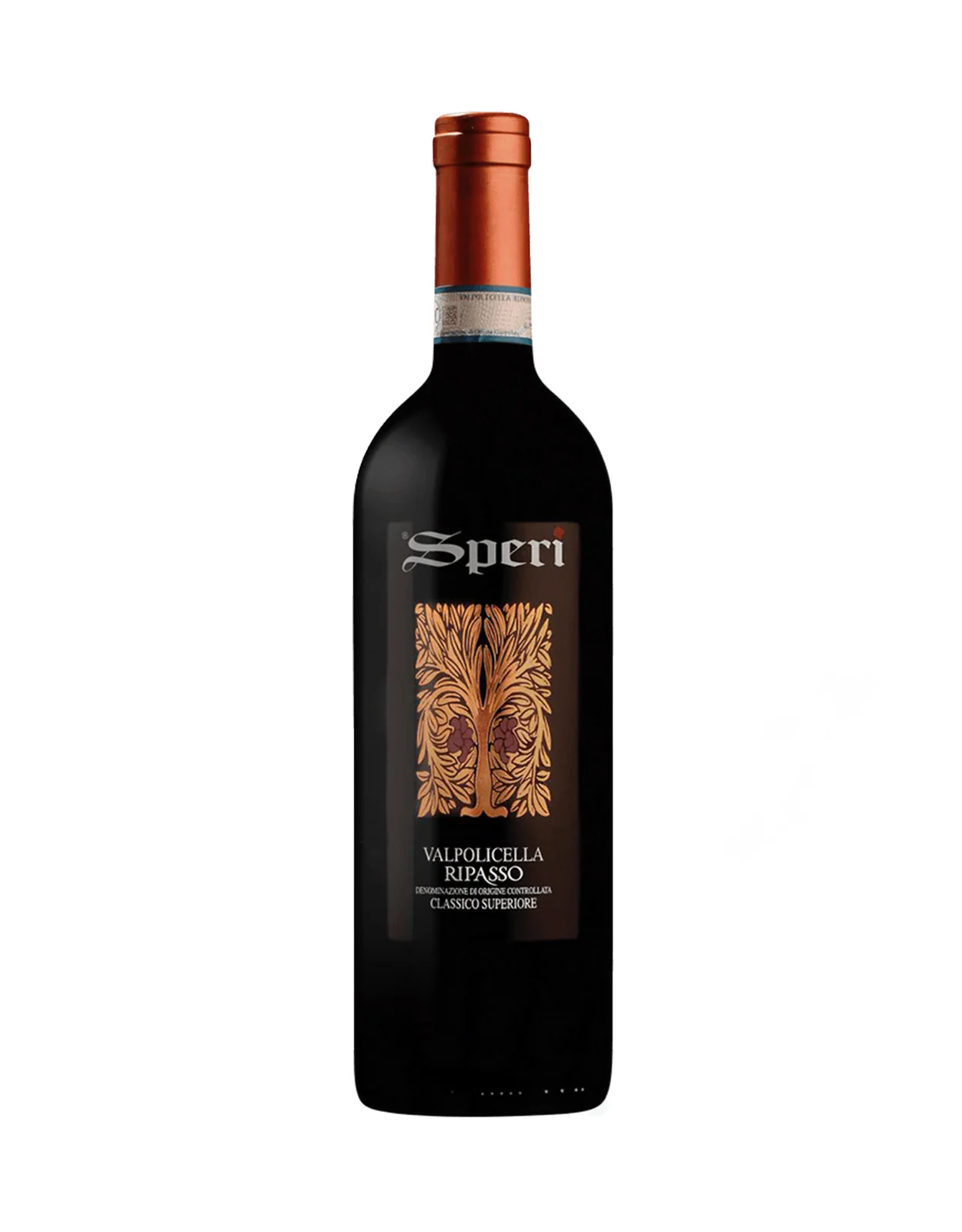
Speri Valpolicella Ripasso 2023
Introduction
Speri is a historic family-owned winery located in the heart of the Valpolicella Classica zone. Their Ripasso is classified as a Valpolicella Ripasso Classico Superiore D.O.C. The winery has practiced sustainable agriculture for many years and achieved organic certification for all their vineyards starting with the 2015 vintage, meaning the Ripasso is produced from organically grown grapes.
The Ripasso Method
The term "Ripasso" literally means "repassed" and refers to the traditional winemaking technique used to create this style of wine:
The base Valpolicella Classico wine is produced and fermented normally.
Around early March, this finished wine is "repassed" or poured over the still-moist, spent grape skins (pomace) leftover from making Amarone della Valpolicella.
This second, brief maceration and re-fermentation imparts greater structure, alcohol content, depth of color, and complex flavours (like dried fruit and spice) that bridge the gap between simple Valpolicella and the powerful Amarone.
Wine Description
The following describes the typical characteristics of recent Speri Valpolicella Ripasso vintages:
Color: A deep, intense ruby red.
Grape Varieties: Primarily indigenous grapes from the Valpolicella Classica region: Corvina Veronese (about 70%), Rondinella (about 20%), and Molinara and other native varieties (about 10%).
Aromatic Profile: The nose is complex, offering hints of red fruit (like red cherry and dried raspberry), spices (clove, black pepper), and cocoa or chocolate. Some vintages show a savoury side with notes of blood orange, dried flowers, or dried thyme.
Palate: The wine is warm and smooth on the palate, with a medium to full body. It is distinguished by its appealing roundness, balanced acidity (often a tangy orange peel or plum skin note), and concentrated fruit flavours.
Structure: Well-balanced by rounded, silky tannins that are vigorous yet not intrusive. It finishes with a good complexity of fruity aromas, savoury tones, and often a mineral-driven note.
Aging: The wine is typically aged for 12 months in large Slavonian oak barrels (botti) of 20 hectoliters, followed by 6 months of bottle refinement.
ABV: Typically 13.5%.
Introduction
Speri is a historic family-owned winery located in the heart of the Valpolicella Classica zone. Their Ripasso is classified as a Valpolicella Ripasso Classico Superiore D.O.C. The winery has practiced sustainable agriculture for many years and achieved organic certification for all their vineyards starting with the 2015 vintage, meaning the Ripasso is produced from organically grown grapes.
The Ripasso Method
The term "Ripasso" literally means "repassed" and refers to the traditional winemaking technique used to create this style of wine:
The base Valpolicella Classico wine is produced and fermented normally.
Around early March, this finished wine is "repassed" or poured over the still-moist, spent grape skins (pomace) leftover from making Amarone della Valpolicella.
This second, brief maceration and re-fermentation imparts greater structure, alcohol content, depth of color, and complex flavours (like dried fruit and spice) that bridge the gap between simple Valpolicella and the powerful Amarone.
Wine Description
The following describes the typical characteristics of recent Speri Valpolicella Ripasso vintages:
Color: A deep, intense ruby red.
Grape Varieties: Primarily indigenous grapes from the Valpolicella Classica region: Corvina Veronese (about 70%), Rondinella (about 20%), and Molinara and other native varieties (about 10%).
Aromatic Profile: The nose is complex, offering hints of red fruit (like red cherry and dried raspberry), spices (clove, black pepper), and cocoa or chocolate. Some vintages show a savoury side with notes of blood orange, dried flowers, or dried thyme.
Palate: The wine is warm and smooth on the palate, with a medium to full body. It is distinguished by its appealing roundness, balanced acidity (often a tangy orange peel or plum skin note), and concentrated fruit flavours.
Structure: Well-balanced by rounded, silky tannins that are vigorous yet not intrusive. It finishes with a good complexity of fruity aromas, savoury tones, and often a mineral-driven note.
Aging: The wine is typically aged for 12 months in large Slavonian oak barrels (botti) of 20 hectoliters, followed by 6 months of bottle refinement.
ABV: Typically 13.5%.
Original: $19.70
-65%$19.70
$6.89Description
Introduction
Speri is a historic family-owned winery located in the heart of the Valpolicella Classica zone. Their Ripasso is classified as a Valpolicella Ripasso Classico Superiore D.O.C. The winery has practiced sustainable agriculture for many years and achieved organic certification for all their vineyards starting with the 2015 vintage, meaning the Ripasso is produced from organically grown grapes.
The Ripasso Method
The term "Ripasso" literally means "repassed" and refers to the traditional winemaking technique used to create this style of wine:
The base Valpolicella Classico wine is produced and fermented normally.
Around early March, this finished wine is "repassed" or poured over the still-moist, spent grape skins (pomace) leftover from making Amarone della Valpolicella.
This second, brief maceration and re-fermentation imparts greater structure, alcohol content, depth of color, and complex flavours (like dried fruit and spice) that bridge the gap between simple Valpolicella and the powerful Amarone.
Wine Description
The following describes the typical characteristics of recent Speri Valpolicella Ripasso vintages:
Color: A deep, intense ruby red.
Grape Varieties: Primarily indigenous grapes from the Valpolicella Classica region: Corvina Veronese (about 70%), Rondinella (about 20%), and Molinara and other native varieties (about 10%).
Aromatic Profile: The nose is complex, offering hints of red fruit (like red cherry and dried raspberry), spices (clove, black pepper), and cocoa or chocolate. Some vintages show a savoury side with notes of blood orange, dried flowers, or dried thyme.
Palate: The wine is warm and smooth on the palate, with a medium to full body. It is distinguished by its appealing roundness, balanced acidity (often a tangy orange peel or plum skin note), and concentrated fruit flavours.
Structure: Well-balanced by rounded, silky tannins that are vigorous yet not intrusive. It finishes with a good complexity of fruity aromas, savoury tones, and often a mineral-driven note.
Aging: The wine is typically aged for 12 months in large Slavonian oak barrels (botti) of 20 hectoliters, followed by 6 months of bottle refinement.
ABV: Typically 13.5%.