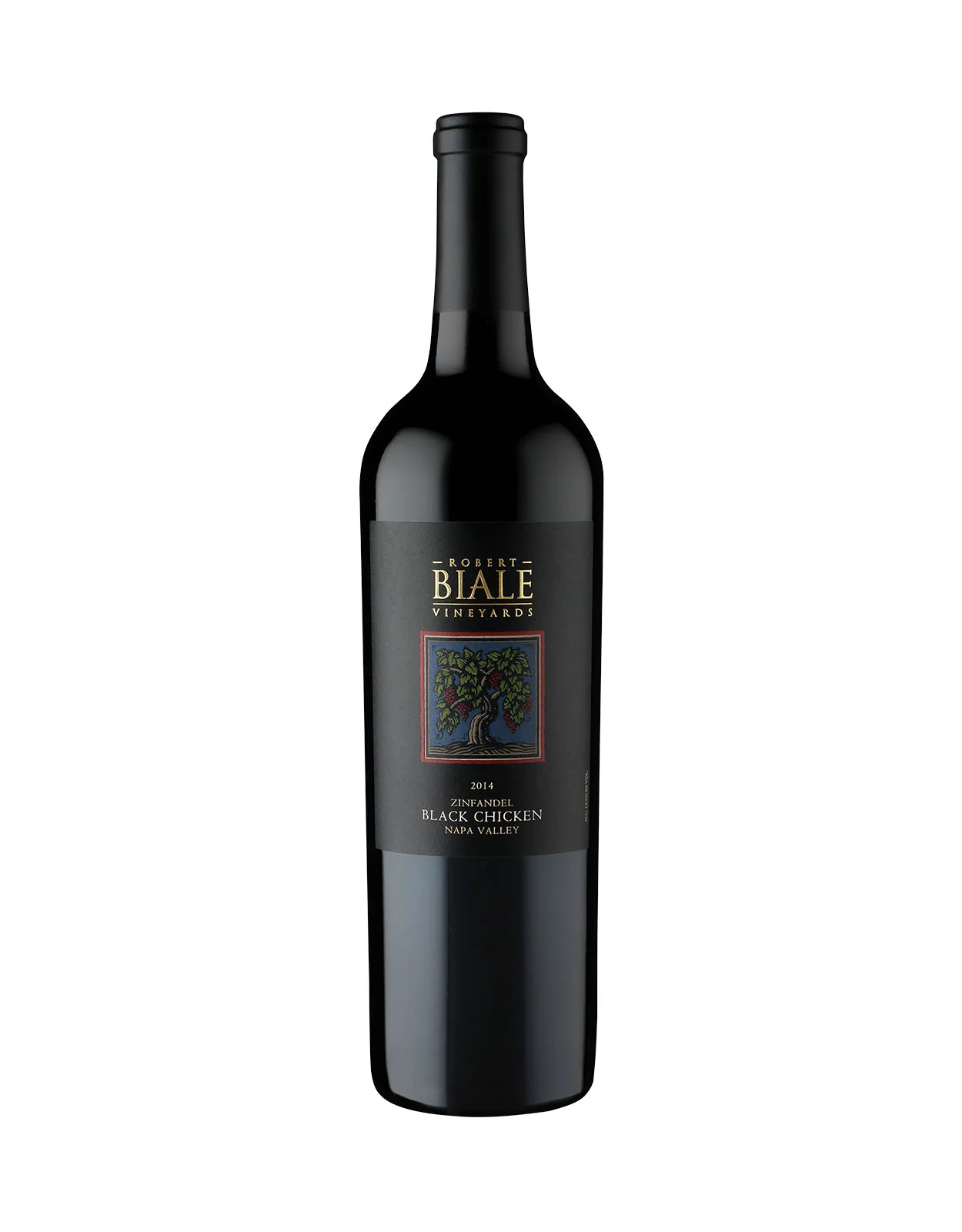
Robert Biale Zinfandel Black Chicken 2023
The "Black Chicken" Legend
-
The Secret Business: In 1943, following the death of his father, 14-year-old Aldo Biale began making homemade Zinfandel to help his mother support their family farm in Napa Valley. Because they didn't have a commercial license to sell alcohol, Aldo had to sell his wine "under the table."
-
The Party Line: During that era, the Biale family used a "party line" phone system, meaning neighbors could pick up their receivers and listen in on conversations. To avoid being caught by nosy neighbors or government authorities, Aldo needed a password.
-
The Code: Since the farm was known for its white leghorn chickens, Aldo told customers to ask for a "Black Chicken" (Gallina Nera in Italian) when they wanted a jug of his inky-dark Zinfandel.
-
The Delivery: Customers would call and order "a dozen eggs and a black chicken." Aldo would then deliver the produce along with the clandestine jug of wine in his 1940 blue Studebaker.
Legacy and Honors
-
The Smithsonian: The story is so central to Napa Valley's history that Aldo’s original "punch-down stick" (used to stir the fermenting grapes) and an old grape-picker's box are part of the Smithsonian Institution’s permanent collection at the National Museum of American History.
-
Legal Production: The wine was first produced legally under the "Black Chicken" label in 1999 as a tribute to Aldo’s resilience and the family's heritage.
The "Black Chicken" Legend
-
The Secret Business: In 1943, following the death of his father, 14-year-old Aldo Biale began making homemade Zinfandel to help his mother support their family farm in Napa Valley. Because they didn't have a commercial license to sell alcohol, Aldo had to sell his wine "under the table."
-
The Party Line: During that era, the Biale family used a "party line" phone system, meaning neighbors could pick up their receivers and listen in on conversations. To avoid being caught by nosy neighbors or government authorities, Aldo needed a password.
-
The Code: Since the farm was known for its white leghorn chickens, Aldo told customers to ask for a "Black Chicken" (Gallina Nera in Italian) when they wanted a jug of his inky-dark Zinfandel.
-
The Delivery: Customers would call and order "a dozen eggs and a black chicken." Aldo would then deliver the produce along with the clandestine jug of wine in his 1940 blue Studebaker.
Legacy and Honors
-
The Smithsonian: The story is so central to Napa Valley's history that Aldo’s original "punch-down stick" (used to stir the fermenting grapes) and an old grape-picker's box are part of the Smithsonian Institution’s permanent collection at the National Museum of American History.
-
Legal Production: The wine was first produced legally under the "Black Chicken" label in 1999 as a tribute to Aldo’s resilience and the family's heritage.
Original: $57.44
-65%$57.44
$20.10Description
The "Black Chicken" Legend
-
The Secret Business: In 1943, following the death of his father, 14-year-old Aldo Biale began making homemade Zinfandel to help his mother support their family farm in Napa Valley. Because they didn't have a commercial license to sell alcohol, Aldo had to sell his wine "under the table."
-
The Party Line: During that era, the Biale family used a "party line" phone system, meaning neighbors could pick up their receivers and listen in on conversations. To avoid being caught by nosy neighbors or government authorities, Aldo needed a password.
-
The Code: Since the farm was known for its white leghorn chickens, Aldo told customers to ask for a "Black Chicken" (Gallina Nera in Italian) when they wanted a jug of his inky-dark Zinfandel.
-
The Delivery: Customers would call and order "a dozen eggs and a black chicken." Aldo would then deliver the produce along with the clandestine jug of wine in his 1940 blue Studebaker.
Legacy and Honors
-
The Smithsonian: The story is so central to Napa Valley's history that Aldo’s original "punch-down stick" (used to stir the fermenting grapes) and an old grape-picker's box are part of the Smithsonian Institution’s permanent collection at the National Museum of American History.
-
Legal Production: The wine was first produced legally under the "Black Chicken" label in 1999 as a tribute to Aldo’s resilience and the family's heritage.